
Why Every Batman Actor Quit The Role
Landing the Batman gig is a prestigious moment for any actor, but the Dark Knight is only ever a temporary assignment. Why did each actor quit?
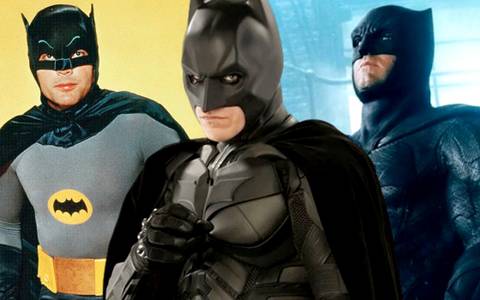
A small colony of famous actors have portrayed Bruce Wayne in live-action Batman movies - here's why each of them hung up the cowl. Precious few heroes carry a movie legacy quite like Batman. The Caped Crusader sits alongside James Bond, Superman, and - in more recent years - Spider-Man as a near-constant presence in movie theaters, recast every few years to keep the franchise moving into the future. Though not as prolific as 007, casting a new Batman is a big deal, always making headlines across the world.
The Batman-tle currently belongs to Robert Pattinson, who will make his DC debut in 2022's The Batman, directed by Matt Reeves. Though Pattinson promises to deliver a very different (read: ruthlessly brutal and liable to snap at any moment) interpretation of Bob Kane and Bill Finger's comic book creation, he joins an elite club of actors. Pattinson is the seventh man to play Batman in a movie adaptation, following in the footsteps of Adam West, Michael Keaton, Val Kilmer, George Clooney, Christian Bale and Ben Affleck.
Though the length of Pattinson's tenure remains to be seen, the Batman gig is a brief one for most. Whether due to studio shenanigans, creative concerns, or something else entirely, each Batman actor allowed a new generation to carry the torch for different reasons.
Adam West
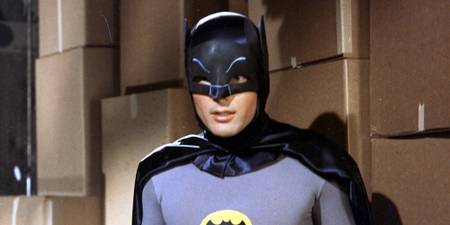
Head toward the complete opposite end of Robert Pattinson's spot on the superhero spectrum, then go a little bit further. There, you'll find Adam West's portrayal of Batman from the 1960s. Cast on the strength of a chocolate milk commercial (or so the story goes), Adam West landed the leading role for 20th Century Fox's Batman TV series, which would run for 120 episodes between 1966 and 1968, and included a feature film between seasons 1 & 2. "Camp" is the word often thrown toward West's not-so-Dark Knight, and it's hard to argue. From the block-color costumes to the "pow" "bam" and "whack" combat balloons, sixties Batman's cartoonish tone wasn't to everyone's taste... but could've been so much worse were it not for West's natural charm and self-effacing good humor.
Adam West didn't quit playing Bruce Wayne and his groovy alter ego. During its third season, Batman suffered a ratings slide and was cancelled by its network, ABC. Plans for a revival at NBC were then quashed because the original TV sets had already been destroyed, making a continuation financially unfeasible. Fortunately, West's crime-fighting career didn't end there. The actor lent his voice to numerous animated Batman releases, first in 1977's The New Adventures of Batman, and finally in 2017's posthumously-released Batman vs. Two-Face.
Michael Keaton
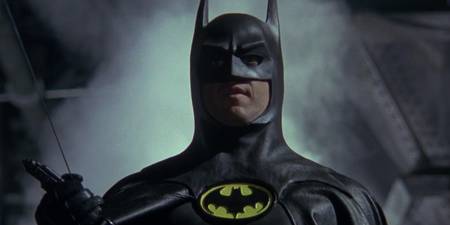
After Adam West's overtly lighthearted portrayal, several decades passed before Batman returned to live-action, but the success of Richard Donner's Superman made a Bat-blockbuster inevitable. The Dark Knight finally returned in 1989 with Tim Burton's big-budget, considerably darker Batman movie. For the prestigious role, Burton cast his Beetlejuice actor, Michael Keaton - an unpopular choice at the time due to Keaton's perception as a "comedic" actor. Those misgivings proved woefully misplaced, as Batman and Batman Returns (1992) saw Michael Keaton evolve into a brooding, tortured movie hero, while still retaining a slither of comic book silliness from Batman's early years.
Tim Burton's Batman Returns provided a more-than-worthy follow-up, and Keaton's popularity was cemented. Alas, the actor wouldn't return for a third outing. Despite pleasing DC fans, Batman Returns deeply upset the film's sponsors, who hadn't expected the sequel to go quite as dark as it did. With Warner Bros. angling for a lighter tone, Burton was replaced by Joel Schumacher, and existing plans for Batman 3 starring Michael Keaton were scrapped. As revealed by the actor himself, Keaton entertained continuing under Schumacher's direction... until reading the proposed script for Batman Forever. He promptly decided it "sucked," realized the franchise was heading in a direction he didn't enjoy, and opted not to return. Like Adam West, Keaton wouldn't stay away from Gotham forever. 30 years on from Batman Returns, Keaton reprises his role in both The Flash and Batgirl.
Val Kilmer
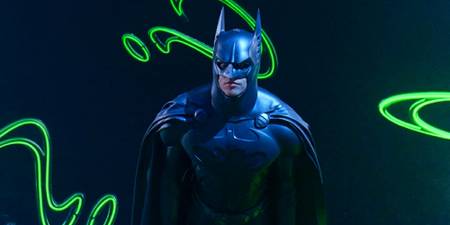
Thanks to Michael Keaton dodging a Batman Forever-shaped bullet, Joel Schumacher needed a new leading man, and cast Val Kilmer after seeing the actor in 1993 western, Tombstone. Not to everyone's taste, perhaps, but Val Kilmer's Batman isn't without merit. The third cinematic Bruce Wayne fulfills the brief by striking a less intense note compared to his predecessor, and though there's cheesy dialogue and trite melodrama in plentiful supply, that's hardly Kilmer's fault. Despite not being the worst thing about Batman Forever, however, Val Kilmer didn't stick around for a sequel.
After performing at the box office (and keeping McDonald's happy, presumably), Warner Bros. committed to a second Joel Schumacher Batman movie, continuing with Chris O'Donnell's Robin and introducing Alicia Silverstone as Batgirl. According to Schumacher's recollection, Val Kilmer's departure from Batman & Robin was a half-quit, half-got-fired situation. The director admits to enduring a poor working relationship with his top actor on Batman Forever, describing Kilmer's behavior as "psychotic" (via Vulture). Kilmer, meanwhile, had other projects in the pipeline (The Saint, The Island of Dr. Moreau), so everyone was only too happy to part ways.
George Clooney
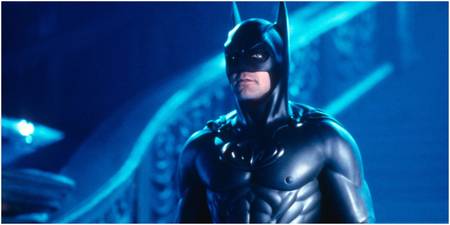
While Val Kilmer's departure benefited all parties, one man who certainly didn't benefit was a certain Bruce Wayne. As much as Kilmer's performance might've irked the DC faithful, Batman & Robin proved how much worse Schumacher's debut could've been by putting George Clooney behind the famous black cowl. Batman & Robin does virtually everything wrong, and Clooney's horrendously miscast Batman interpretation shoulders its share of the blame.
And that's exactly why the actor didn't make his Batman return. Following Batman & Robin's vitriolic reaction and commercial under-performance, Warner Bros. axed plans for a follow-up, widely known as Batman Unchained/Batman Triumphant. These failings were not lost upon George Clooney either. Though originally slated to return in a story involving Scarecrow and Harley Quinn, the unanimously bad response caused Clooney to steer clear of superheroes thereafter, and Hollywood's most famous coffee salesman has repeatedly apologized ever since. Even if Batman Unchained had gone ahead, Clooney's interview comments suggest he likely would've ducked out anyway.
Christian Bale
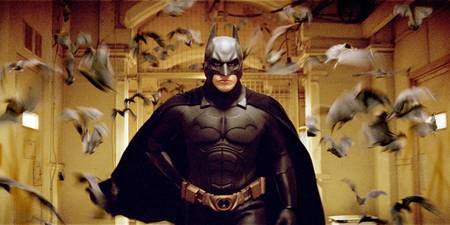
Battered and bruised, the Batman franchise took some time away to recover (presumably in an underground desert prison with terrible health and safety standards), before eventually returning under the guardianship of Christopher Nolan for 2005's Batman Begins. Nolan plumped for rising British actor Christian Bale as his Dark Knight, and the response to Batman Begins couldn't have varied more wildly compared to Batman & Robin. Easily the best received Batman/Bruce Wayne combo since Michael Keaton, Bale's intensity, drive and heroism heralded a brand new era of realism for Batman movies, and subsequent turns in The Dark Knight and The Dark Knight Rises only solidified his gravely-voiced vigilante into cinematic legend.
In contrast to Batman actors of yore, Christian Bale didn't depart his breakout role due to dwindling audience interest, creative differences, or on-set feuds. For once, a big screen Batman story simply reached its natural conclusion, and Christian Bale bowed out on a high. Christopher Nolan has stated in various interviews how he approached each Batman movie one-at-a-time, never taking a sequel for granted. As revealed by Christian Bale (via Toronto Sun), however, the director and actor privately agreed to stop at 3 movies, should their Batman vision reach that milestone. After The Dark Knight Rises, that's exactly what happened, with both turning down overtures from Warner Bros. for a fourth entry.
Ben Affleck
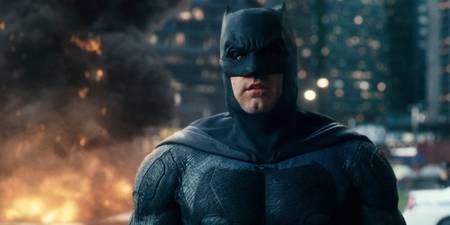
The most recent Batman departure also happens to be the most convoluted, happening due to a multitude of factors that converged all at once. Glancing over at Marvel and seeing how rosy things were in the MCU, Warner Bros. decided Man of Steel would be the jumping-off point for their own shared universe, the DCEU. Needing a Batman to star alongside Henry Cavill's Superman, Zack Snyder controversially cast Ben Affleck who, lest we forget, got Daredevil all kinds of wrong in 2003. Though Batman V Superman: Dawn of Justice proved to be one of the most divisive superhero movies ever made, fans generally agreed Affleck redeemed himself after his Marvel malaise. Justice League followed, and Affleck was slated to direct and star in The Batman, his solo DCEU effort.
That didn't happen. In early 2017, Affleck announced his stepping away from the director's chair, citing an inability to "crack" the script during a Jimmy Kimmel Live! interview. Matt Reeves was hired several months later, and by January 2019, Affleck confirmed he had departed The Batman as an actor also, later attributing the decision to his struggles with alcohol and not wishing to "drink [him]self to death" by going through another production like Justice League. Ben Affleck's departure was, therefore, a series of unfortunate circumstances. Matt Reeves had his own Batman vision, Ben Affleck was in an unhealthy place, and Warner Bros. was overhauling its DCEU strategy.
Though The Batman would eventually become standalone - merely sharing a name with Affleck's original Batman project - the actor attended rehab and announced his glorious DCEU return in August 2020, joining Michael Keaton in The Flash.


Post a Comment